US military campaign against Iran cannot force hardline regime to give up
Fundamental analysis
2026-08-13 07:48:11
Buyers of the euro, the pound sterling, and other risk assets are looking at future growth prospects with caution, favoring the US dollar as geopolitical tensions are once again causing serious concern.
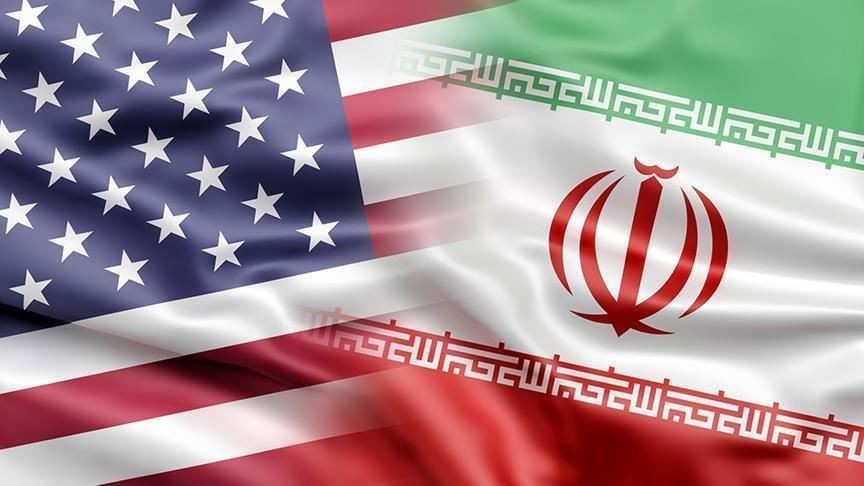
The US military campaign against Iran has so far failed to force the regime to capitulate, and Trump's administration is returning to a strategy of relying on crippling economic pressure. Facing shortages of needed munitions and fearing the continuation of an unpopular war, Trump and his senior officials are betting on a steady intensification of sanctions and a naval blockade to choke off oil exports. This is a notable change of course for an administration that just days earlier had threatened to ramp up the military campaign after nearly six months of war against Tehran.
The new approach has been dubbed "Economic Fury," headed by Defense Secretary Scott Bessent. Trump himself recently expressed a similar view in an interview, saying that he does not attach much importance to the situation with Iran: "We're just watching Iran, given its huge inflation and the fact that they have no money." Bessent said a few weeks earlier, "The government is making people suffer, and we will continue to apply pressure."
Some experts support the administration's logic, pointing to changed external conditions and arguing that because jurisdictions previously used to circumvent sanctions — including the UAE — are becoming far less hospitable to illicit financing and trade with Iran, and because global markets are reducing their reliance on Iranian goods, existing US sanctions are becoming much more effective.
However, others oppose this theory, and historical experience speaks directly against it. The US has imposed sanctions on Iran, as it has on several other countries, for decades, yet this has not led to substantial political change; similar examples include North Korea and Cuba.
There have so far been no tangible results across the main fronts. Tehran has not yielded on its nuclear program or on control of the Strait of Hormuz, which effectively remains closed as Iran issues ever-new demands for the waterway to be reopened.
The White House recently said that sanctions and the naval blockade have left Iran in complete ruin, and that Trump has many levers he can deploy in the coming months, though it did not specify what those are. Economists and experts note that the key problem with the current strategy is that each next step is more costly than the previous one.
As I noted above, buyers of risk assets are reacting to these changes right now.
Regarding the current technical picture for EUR/USD, buyers now need to think about taking the 1.1540 level. Only that will allow them to target a test of 1.1560. From there, they could move up to 1.1580, but doing so without support from large players would be quite difficult. If the instrument falls, I expect any serious activity from large buyers only around 1.1515. If there is nobody there, it would be wise to wait for a new low at 1.1500 or to open long positions from 1.1480.
As for the current technical picture for GBP/USD, pound buyers need to take the nearest resistance at 1.3507. Only that will allow them to target 1.3541, above which it will be rather difficult to break through. The furthest target is the 1.3581 area. If the currency pair falls, bears will try to seize control of 1.3467. If they succeed, a breakout of the range will deal a serious blow to bulls' positions and push GBP/USD down to 1.3435 with the prospect of moving on to 1.3401.
Смотрите также