Where to Sell and Buy the Euro: Simple Trading Tips for Beginner Traders for October 6
Forecast
2026-10-06 07:05:13
Trade analysis and tips for the euro
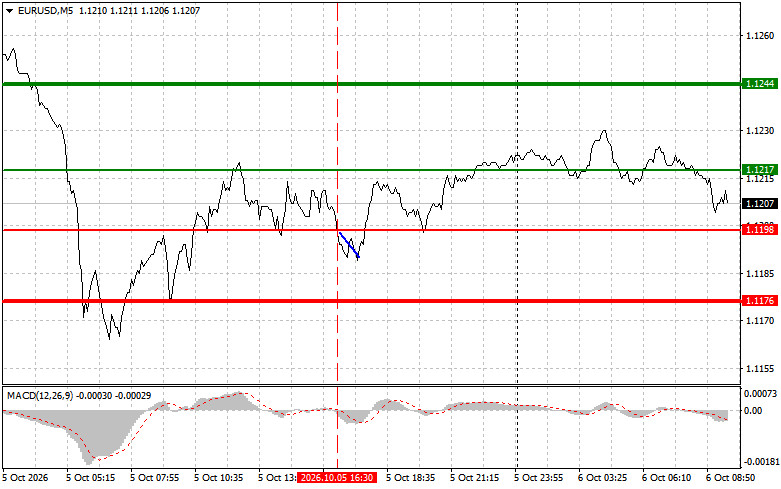
The test of 1.1198 occurred as the MACD indicator was starting to move down from the zero line, confirming a good entry point to sell the euro. However, a major collapse did not follow.
For the euro, yesterday's US data were bad news with a caveat. The dollar eased slightly after the ISM services report but remained strong because of the report's content. The activity index fell 0.5 points to 54.9. Service demand holds, and for the Federal Reserve that mix is inconvenient because it strengthens the case for those advocating further hikes. The euro looks paradoxical: the region's real economy also shows decent results, and for the European Central Bank— which has already raised the deposit rate to 2.50% — this is another hawkish argument. Still, the currency cannot fully capitalize on these developments. The dollar remains a safe-haven amid budget problems and political uncertainty in Europe, and the French-to-German bond spread is at its widest since 2011.
For the single currency, today's data read like an exam with no one expecting either a top grade or a failure. The first half of the day will bring August German factory orders, French industrial production and eurozone retail sales. Forecasts are mixed, and expecting them to push the euro strongly higher is naive. It's more a test of whether the real economy matches the optimism shown in the September sectoral PMI. I expect a neutral result will leave the euro near recent lows and give buyers only a short breather.
For intraday strategy, I will rely primarily on Scenario 1 and Scenario 2 below.
Scenarios to buy
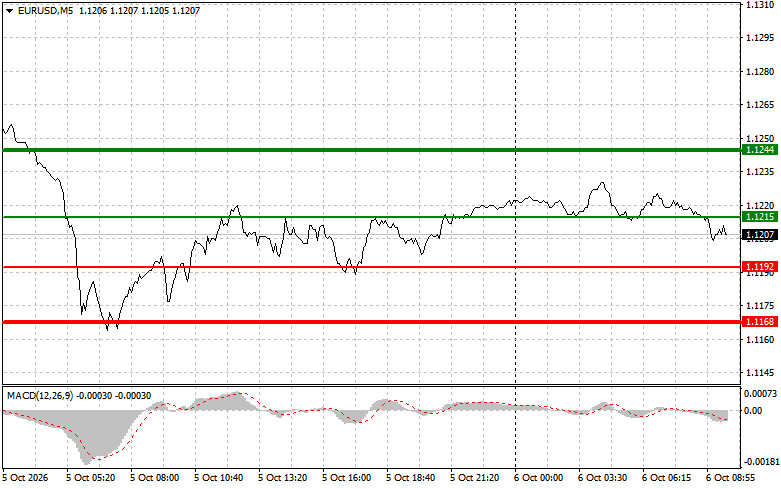
Scenario 1: Buy the euro today if price reaches around 1.1215 (green line) with a target of 1.1244. Plan to exit at 1.1244 and sell on a reversal, expecting 30–35 pips from the entry. Expect euro strength only after strong data. Important: before buying, ensure MACD is above zero and only beginning to rise.
Scenario 2: Also buy if there are two consecutive tests of 1.1192 while MACD is in the oversold area. This would limit downside potential and trigger an upward reversal. Expect moves to 1.1215 and 1.1244.
Scenarios to sell
Scenario 1: Sell the euro after it reaches 1.1192 (red line). Target 1.1168, where I plan to exit and immediately buy the reverse, expecting a 20–25 pip countermove. Pressure will return on poor data. Important: before selling, ensure MACD is below zero and only beginning to fall.
Scenario 2: Also sell if there are two consecutive tests of 1.1215 while MACD is in the overbought area. This would cap upside and trigger a downward reversal. Expect declines to 1.1192 and 1.1168.
What's on the chart:
Thin green line – entry price at which you can buy the trading instrument.
Thick green line – approximate price where you can place Take Profit or manually lock in profits, since further upside above this level is unlikely.
Thin red line – entry price at which you can sell the trading instrument.
Thick red line – approximate price where you can place Take Profit or manually lock in profits, since further downside below this level is unlikely.
MACD indicator. When entering the market, it is important to follow the overbought and oversold zones.
Important. Beginner traders in the Forex market must be very cautious when making entry decisions. It is best to stay out of the market before the release of important fundamental reports to avoid getting caught in sharp price swings. If you decide to trade during news releases, always place stop orders to minimize losses. Without stop orders,, you can quickly lose your entire deposit, especially if you don't use money management and trade large volumes.
Remember that successful trading requires a clear trading plan, like the example above. Spontaneous trading decisions based on the current market situation are inherently a losing strategy for an intraday trader.
Смотрите также