analytics1_1
Binance loses $6.3b in largest crypto hack ever, but Tether and Circle freezes avert FTX-style collapse
Binance loses $6.3b in largest crypto hack ever, but Tether and Circle freezes avert FTX-style collapse

Crypto-currencies
2026-10-30 07:04:09
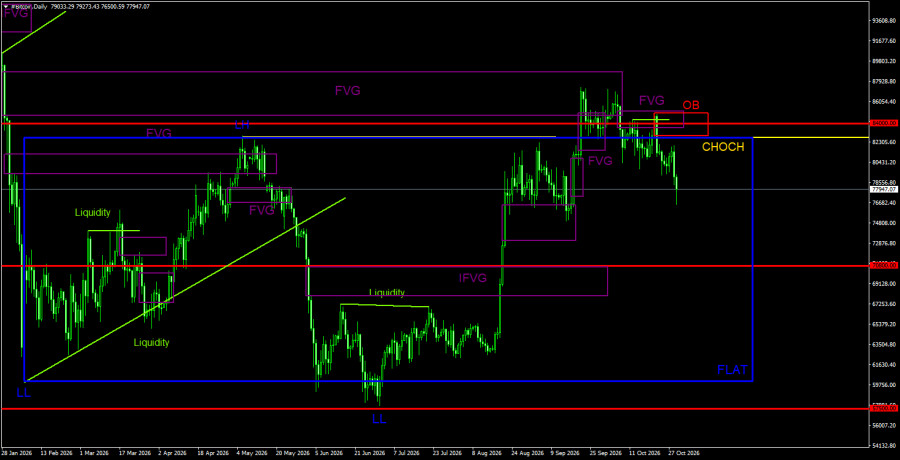
Yesterday, Binance reported roughly $6.3 billion in losses from a hack, already being called the largest theft in crypto history. The market reacted immediately: Bitcoin plunged nearly 5% below $77,000, Ether fell about 5.7%, BNB dropped 8%, and Aave tumbled about 11%. For investors who had enjoyed a two-month recovery in prices, this was a heavy blow.
Binance's statement highlighted key actions. "We have worked with blockchain partners to freeze the affected assets, and roughly $3 billion frozen on-chain so far," the exchange said. Withdrawals are temporarily suspended and expected to resume within 48 hours, co-founder Yi He said. Binance pledged to cover all losses and insisted that user funds are safe. Let me remind you that the exchange has a SAFU fund of about $1 billion in Bitcoin and held roughly $144 billion in assets before the hack — so the loss is about 4% of that pre-hack balance.
Analysts were quick to point fingers. TRM Labs attributes the theft to an elite North Korean hacker group called "TraderTraitor." "TRM attributes the attack to TraderTraitor, North Korea's elite hacking unit, based on robust on and off-chain intelligence," the firm said. The previous record hack was Bybit in February 2025 (~$1.5B), so this new loss is roughly four times larger. On-chain traces show outbound flows of billions from exchange wallets: about $3.53B on Ethereum, $1.5B in Bitcoin, $628M on Tron, and smaller sums on Arbitrum, Optimism, and Base — total outflow exceeding $5.6B.
The attack was technically sophisticated. The hacker briefly altered the code of one of Binance's hot wallets via EIP-7702, a feature from Ethereum's Pectra upgrade that allows a normal wallet to temporarily behave like a smart contract if presented with a valid private-key signature. The attacker obtained such a signature, set a delegation to their contract-collector, and drained funds — ETH and many tokens, including large stablecoin amounts. To improve success odds, the hacker pre-sent about 50 authorizations with sequential nonces and broadcast them at once; the network accepted only the transaction whose nonce matched at execution time. Binance's preliminary probe points to a compromised DevOps engineer's laptop and access to a service container, while the exchange says it found no evidence of private-key leakage. TRM suspects signing-infrastructure compromise for hot wallets; the final root cause has not yet been published.
Stablecoin issuers moved fast to contain the damage. Tether and Circle froze more than $2.3 billion of stolen funds. Tether CTO Paolo Ardoino said over $1.567 billion in USDT has been frozen and later reported an additional $200 million frozen, stressing that protecting the ecosystem and partners is the top priority. Circle CEO Jeremy Allaire said the company, working with law enforcement, froze more than $800 million in USDC and continues to assist the investigation. Aave disabled lending markets to prevent the hacker from borrowing against stolen collateral. The ability of centralized stablecoin issuers to freeze tokens proved decisive: they recovered a large share of the stolen funds, something impossible with pure BTC. Still, TRM estimates the attacker still controls more than 420,000 ETH and 18,270 BTC — roughly $2.4 billion — beyond the reach of issuers.
I don't see this turning into an FTX-style collapse. Then, an exchange became insolvent; now Binance has assets, a SAFU fund, and a promise to cover losses, and a portion of the stolen funds is frozen. So a systemic trust crisis is unlikely in my view. But market pressure will remain until withdrawals resume and until it is clear what the hacker will do with the remaining coins.
Technical analysis and recommendations
Bitcoin
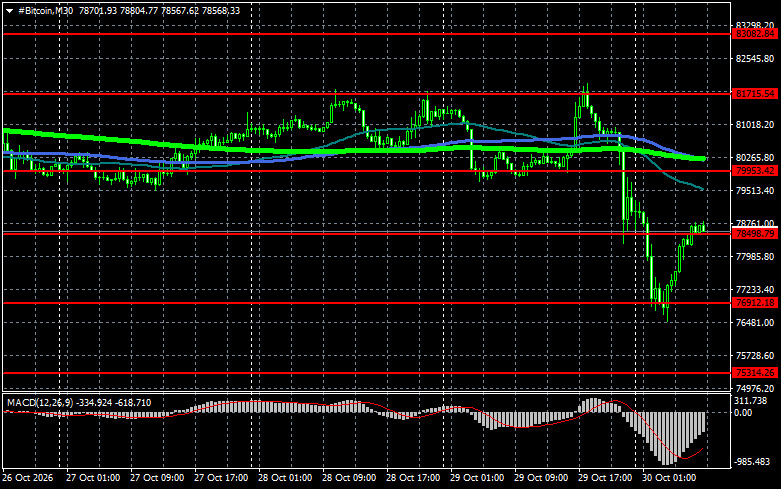
Buyers are targeting a return to $78,500, which would open a path to $79,900 and then $81,700 — a break above which would suggest attempts to restore the bull trend. On the downside, look for buyers near $76,900. A decisive break below that area could push BTC toward $75,300. A deeper target would be about $72,800.
Ethereum
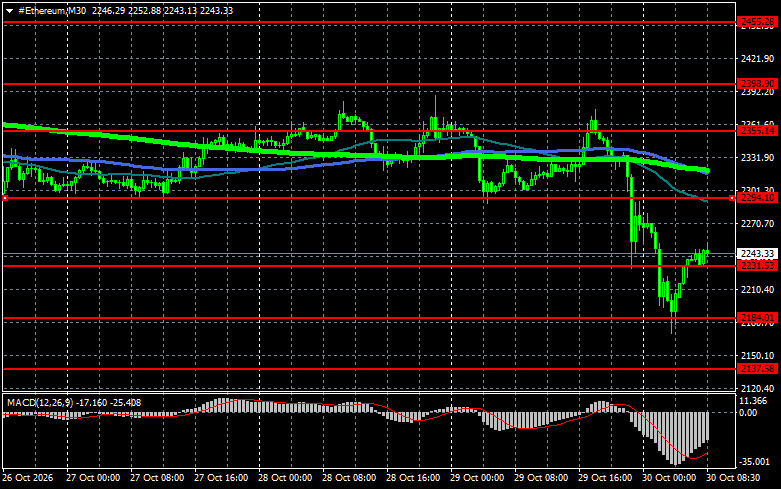
Consolidation above $2,294 would open a route to $2,355, with a further target near $2,398. Clearing that level would confirm a stronger bullish trend and renewed buyer interest. On the downside, buyers are expected near $2,231. A break below that level could rapidly drive ETH toward $2,184. A deeper target in an extended sell-off would be around $2,137.
What's on the chart:
- Red: support and resistance levels where the price is likely to slow or accelerate
- Green: 50-day moving average
- Blue: 100-day moving average
- Light green: 200-day moving average
Crosses of — or the price tests of — these averages typically either halt moves or set the next market impulse.
Смотрите также